
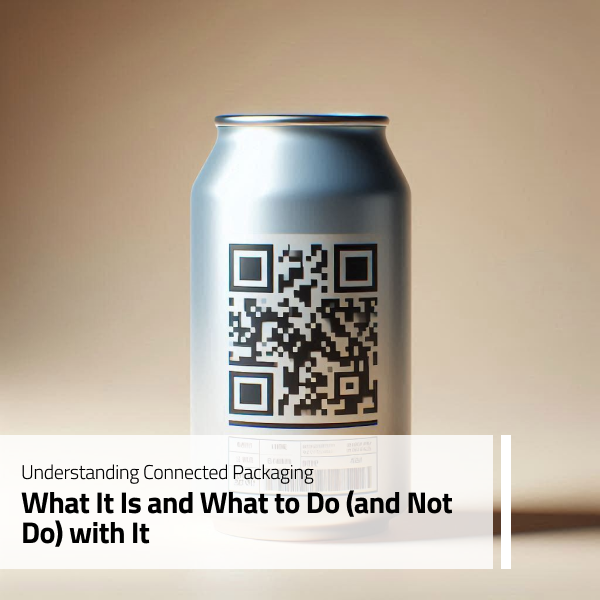
Consumers don’t just want a product anymore. They want the story behind it, proof it’s genuine, and a reason to come back. That shift is exactly what Connected Packaging was built for.
What is Connected Packaging?
Connected Packaging is the integration of digital technology — usually a QR code, NFC tag or AR trigger — into physical product packaging, so a single scan turns the pack into an interactive experience. Instead of ending at the point of purchase, the relationship between brand and consumer continues every time someone picks the product back up.
Key Components
- Smart Packaging — QR codes, NFC tags and RFID labels that trigger a digital interaction the moment a pack is scanned or tapped.
- Augmented Reality Packaging — AR layers that bring a product to life through the smartphone camera, from 3D animations to interactive storytelling.
- Intelligent Packaging — Sensors and connectivity that report back on how, when and where a product is actually being used.
- AI-personalised experiences — The newest layer: instead of one generic landing page, the experience adapts to the individual, recommending recipes, content or offers based on what someone tells it.
- Sustainability education — Recycling instructions, sourcing information and carbon footprint data delivered digitally instead of squeezed onto a label.
Why It Matters Right Now
Regulation is catching up. Initiatives such as GS1 Sunrise 2027 and the EU’s Digital Product Passport requirements are pushing brands to rethink how packaging communicates information in the first place. Connected Packaging is increasingly the mechanism brands use to meet those requirements, not just a nice-to-have engagement layer bolted on afterward.
It’s also no longer a fringe tactic. In our own 2026 Global Connected Packaging survey, 83.3% of brands said they’re already planning a connected packaging campaign for 2026 — putting it firmly in “expected” territory rather than “experimental.” And the regulation angle isn’t just theoretical for them: 51.4% cite DPP and GS1 compliance as a top driver behind that investment, right alongside engagement and data goals.
The Benefits
- Enhanced consumer engagement — instant access to videos, promotions and interactive content through QR code marketing.
- Improved brand loyalty — gamification and playable ads create experiences people actively return for, not just glance at once.
- First-party consumer insights — GDPR-compliant data on buying habits, demographics, engagement time and scan behaviour, collected directly rather than bought from a third party.
- Sustainability communication — space for the recycling and sourcing detail that a physical label simply can’t fit.
- Compliance-readiness — a foundation that supports GS1 Digital Link and Digital Product Passport requirements as they roll out market by market, and one that over half of brands are now building for explicitly.
Do’s of Connected Packaging in 2026
- Do focus on user experience The interaction has to add real value and stay simple. If it takes more than one scan and a few seconds to understand what’s on offer, most people won’t bother.
- Do leverage QR code marketing effectively Make the code prominent, easy to scan, and worth scanning — a real reward, game or piece of information, not a dead-end link to the homepage.
- Do incorporate gamification Gamification marketing is still one of the strongest levers for repeat engagement. Alpro’s Kids campaign, for example, built an adventure-game experience around collectible superhero characters and a weekly leaderboard — exactly the kind of mechanic that pulls kids (and parents) back for a second and third scan.
- Do build in AI personalisation Sunny’s cooking oil campaign uses an AI-powered “My Fridge” feature that turns ingredients a shopper already has at home into tailored recipe suggestions — a level of relevance a static microsite could never offer.
- Do use augmented reality where it earns its place AR still works best for storytelling and product education — bringing sourcing, provenance or usage instructions to life rather than being added purely for novelty.
- Do gather and act on the data Every scan is a data point on preferences and behaviour. The brands getting the most from Connected Packaging are the ones feeding those insights back into product development and future campaigns, not just reporting on them.
Connected Packaging in Action: Recent Case Studies
Here’s how three brands used Connected Packaging and what came back.
Suntop: Turning Back-to-School Into a Regional Engagement Engine
Coro’s juice brand Suntop partnered with Appetite Creative on its “Mega Back to School 2025” campaign across Saudi Arabia, Oman, Bahrain and the UAE, building on an earlier campaign that had already delivered an 18% sales lift. QR codes on-pack led to a One Piece-themed prize draw, with entries and rewards tracked securely in Arabic and English. The full Suntop case study has the complete breakdown, but the headline numbers are 1 million unique visitors and 5.6 million page views, with an average visit duration of 1 minute 44 seconds.
Alpro: Making Plant-Based Nutrition Playful for Kids
For the launch of its Alpro Kids range, Danone’s Alpro built a QR-triggered adventure game where children pick a superhero alter ego and collect ingredients while learning about the range’s nutritional benefits. A weekly UK leaderboard with Lego vouchers kept players coming back over the ten-week campaign. As the Alpro case study shows, the experience achieved 113,000 total pageviews and an average visit duration of over 4 minutes — a strong signal that the gamified format held attention well beyond a single scan.
Sunny: AI-Powered Recipes From an Everyday Cooking Oil
Sunny, the UAE’s number one blended oil brand, used Connected Packaging to solve a real household problem: what to cook with what’s already in the fridge. Its AI-driven “My Fridge” tool suggests recipes based on ingredients a shopper already has, alongside three branded mini-games and a leaderboard with prizes. Full details are in the Sunny case study: the campaign reached 10.9k pageviews with an average visit duration of 6 minutes 21 seconds — one of the strongest engagement times across recent campaigns, and a clear sign that AI-personalised utility keeps people engaged far longer than a game alone.
FAQ
Is Connected Packaging just QR codes? No. QR codes are the most common entry point, but the technology also includes NFC tags, RFID, AR triggers and, increasingly, AI-driven personalisation once someone has scanned in.
Does Connected Packaging replace traditional marketing? It complements it. Because every scan comes from someone already holding the product, Connected Packaging tends to perform better on engagement metrics than cold digital advertising, but it works best as part of a wider campaign, not a replacement for one.
How does Connected Packaging support sustainability and compliance goals? It gives brands space to publish recycling instructions, sourcing data and other sustainability information that won’t fit on a physical label, and it’s increasingly the mechanism brands use to prepare for requirements like GS1 Sunrise 2027 and Digital Product Passports — already a top-three driver for over half of brands surveyed.
What data can brands actually collect? Typically buying habits, product preferences, engagement time, scan location and demographics — all first-party and, when built properly, fully GDPR-compliant.
In Short
Connected Packaging has moved well past the novelty stage. What separates the campaigns getting real results in 2026 — Suntop, Alpro and Sunny among them — is that they treat the scan as the start of a relationship, not the end of a transaction: gamified, personalised with AI, and built on data that feeds back into the next campaign. With 83.3% of brands already planning their next move and compliance now a top driver for over half of them, that foundation is becoming less optional every quarter.
Ready to See What This Could Look Like for Your Brand?
Talk it through with our team — schedule a free consultation and we’ll walk you through what’s possible for your packaging, no commitment required.
Not ready to talk yet? You can download the 2026 Global Connected Packaging Report, get a copy of the Connected Packaging book, or browse the case study library for more proof first.
About the Author: Jenny Stanley is Founder and Managing Director of Appetite Creative, the global leader in connected packaging. With over 20 years in international sales and creative technology, Jenny has pioneered the integration of digital experiences into physical packaging for brands including Tetra Pak, AB InBev, Nestlé, and Bacardi. She is author of ‘Connected Packaging: The Game-Changing Marketing Tool’ (2024, updated 2025) and regularly speaks at industry conferences on AI, emerging technology, and packaging innovation.